External Attack Surface Intelligence Platform (Domain Layer)
ThreatScoutDomains by SecureSphereLabs enables real-time detection of malicious and spoofed domains, helping organizations proactively defend against phishing and domain-based attacks before they cause damage.
Introduction
Domain-based attacks, including phishing, typosquatting, and brand impersonation, continue to be one of the most effective initial access vectors for attackers. Despite advancements in endpoint and network security, malicious domains remain a persistent blind spot for many organizations.
To address this challenge, SecureSphereLabs developed ThreatScoutDomains — a real-time domain intelligence and monitoring platform designed to detect suspicious and malicious domains before they can be weaponized.
What is ThreatScoutDomains?
ThreatScoutDomains is a specialized security tool focused on identifying fraudulent, spoofed, and high-risk domains in real time.
It continuously monitors domain registrations and analyzes patterns to detect domains that may be used for phishing, scams, or impersonation attacks.
ThreatScoutDomains enables organizations to detect threats at the domain level—before payload delivery or user interaction occurs.
Why Domain Intelligence Matters
Modern cyberattacks often begin outside the organization’s perimeter. Attackers register lookalike domains to impersonate brands, employees, or services.
These domains are used to:
- Launch phishing campaigns
- Distribute malware
- Conduct business email compromise (BEC) attacks
- Harvest credentials from unsuspecting users
Traditional security controls often fail to detect these threats early, making domain intelligence a critical layer of defense.
Key Capabilities of ThreatScoutDomains
ThreatScoutDomains provides:
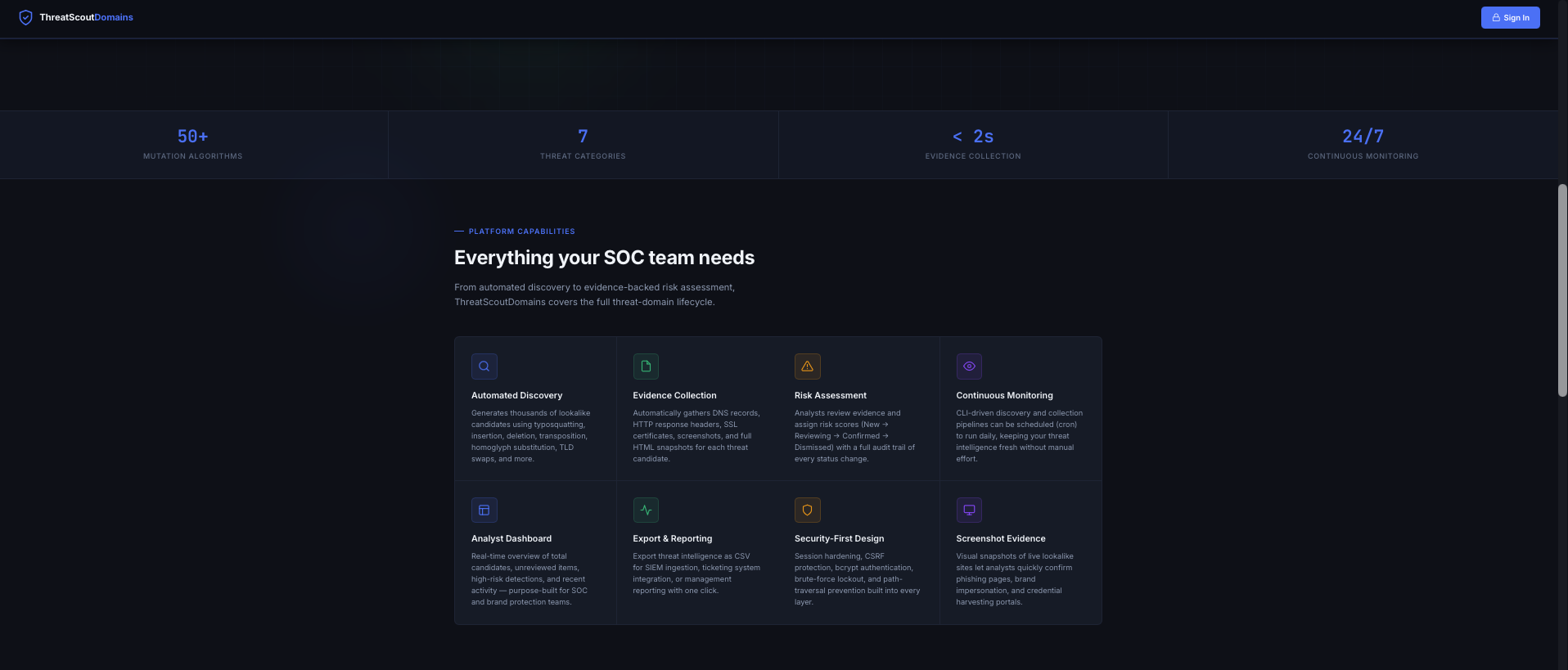
- Real-time monitoring of newly registered domains
- Detection of typosquatting and brand impersonation domains
- Risk scoring and threat classification
- Early warning alerts for suspicious domain activity
- Integration-ready insights for SOC teams
These capabilities align with modern threat intelligence practices, where real-time visibility into external threats is essential for proactive defense. :contentReference[oaicite:0]{index=0}
Real-World Attack Scenario
Consider an attacker registering a domain similar to your company’s name:
example-securespherelabs.com
Within hours, this domain could be used to:
- Send phishing emails to employees or customers
- Host credential harvesting pages
- Impersonate internal communication channels
Without proactive monitoring, such domains often remain undetected until damage has already occurred.
How ThreatScoutDomains Solves This
ThreatScoutDomains identifies suspicious domains at the earliest stage—during or shortly after registration.
By analyzing naming patterns, domain similarity, and threat indicators, it provides actionable intelligence that allows security teams to:
- Block domains before user interaction
- Initiate takedown procedures
- Alert internal teams proactively
- Strengthen brand protection strategies
Expert Insight
Godson Chittilapilly, CEO & Founder of SecureSphereLabs: “Attackers don’t start with malware—they start with infrastructure. If you can detect and disrupt malicious domains early, you can break the attack chain before it even begins.”
Strategic Importance
Threat intelligence platforms globally emphasize the importance of external visibility and real-time insights to detect emerging threats before exploitation. :contentReference[oaicite:1]{index=1}
ThreatScoutDomains aligns with this approach by focusing on one of the earliest indicators of attack infrastructure: malicious domain registration.
Conclusion
In today’s threat landscape, waiting for alerts from internal systems is no longer sufficient. Organizations must extend their visibility beyond their perimeter.
ThreatScoutDomains represents a shift toward proactive cybersecurity—detecting threats before they reach users, systems, or data.
About the Author
Godson Chittilapilly is the CEO and Founder of SecureSphereLabs, specializing in offensive security, threat detection, and enterprise cybersecurity solutions. He actively researches emerging attack vectors and develops tools like ThreatScoutDomains to help organizations stay ahead of evolving cyber threats.